

Power-anchored, behind-the-meter compute for rapid deployment and distributed inference
Energy and infrastructure operators, building behind the meter.

30+ years in investment management and Asian energy; 60 MW of waste-to-energy power in Thailand.
in
20+ years in waste-to-energy; Engineering Director of N-Line, which equipped five of our eleven host plants.
in
25+ years in Tier III / IV data centres; BICSI DCDC, Uptime ATD/ATS.
in
15 years scaling global distributed-infrastructure networks, including a system that once represented ~85% of IPFS DHT traffic.
inAsia needs regional inference capacity close to users. Vailinor builds it at operating renewable biomass plants, where firm power, water and grid backup are already in place.
Capital and Asian energy, biomass plant engineering, Tier III / IV data centre design and global distributed networks. The same team secures the power and builds the compute on it.
Letters of intent with operating plants for behind-the-meter supply, so sites can energise without waiting years in a grid queue. Definitive power agreements are to follow.
Eleven host plants in Thailand, each with firm power, on-site water, 115 kV substation access and four-route diverse fibre.
Target path from committed site to Ready-for-Service, with the first site targeted for late 2027.
Phase 1 plus a 315 MW qualified expansion pipeline of further plants.
What we deliver: a turnkey, fully fitted and commissioned AI-ready data centre, excluding customer-supplied GPU systems.
Figures are site and facility capacity. Final IT load, commercial terms and Ready-for-Service dates are subject to diligence and definitive agreements.
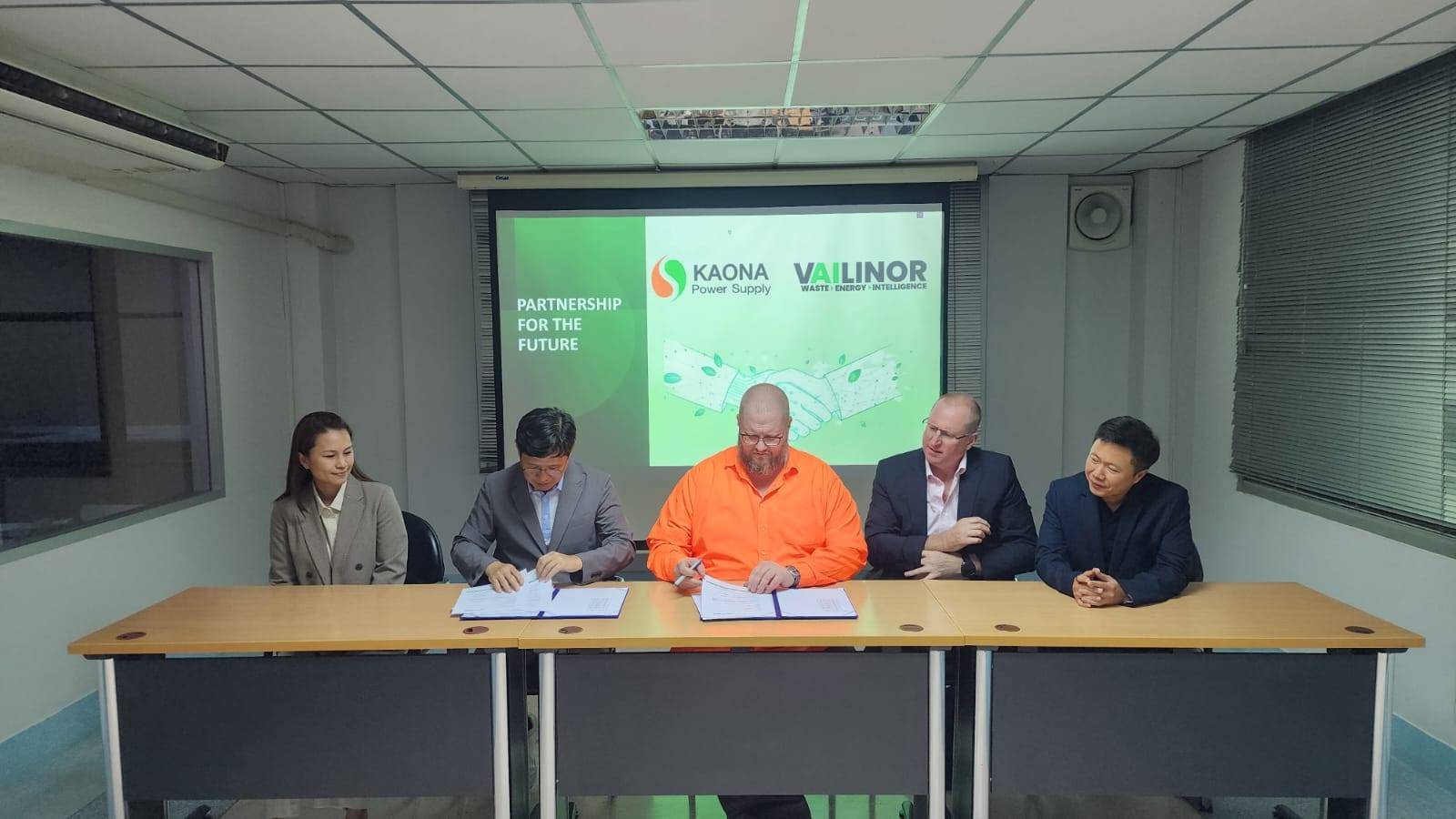
Letter of intent signed with Kaona Power Supply for dedicated behind-the-meter power and land at our first site.
Thailand's Energy Regulatory Commission registration for on-site power supply to AI compute, with the first site's corporate PPA registered.
157.1 MW across eleven operating host plants, with letters of intent covering 113.3 MW of behind-the-meter power.
First site targeted for Ready-for-Service, subject to funding and customer commitments.
A short summary of the platform, the Phase 1 portfolio and the team. Tell us who you are and we will be in touch.
Asia is approaching a structural gap in AI compute infrastructure. The missing layer is distributed regional inference infrastructure between centralized campuses and edge endpoints. VAILINOR is building that layer through power-anchored, ultra-low-latency AI infrastructure positioned near demand, where latency, deployment speed, and compute availability will define the next phase of AI adoption.
Renewable biomass, behind-the-meter power providing immediate energisation for AI compute
Secure long-term power supply agreements with renewable biomass power plants near major metropolitan centers
Monetise AI infrastructure through turnkey fitted delivery, capacity offtake, and strategic partnerships
Deploy AI-ready Tier III / Tier IV compute infrastructure co-located with power assets, supported by dedicated water resources and 24/7 grid redundancy.
Dual-provider, four-route fibre architecture with four diverse site entries and dual meet-me rooms
Power-anchored, ultra-low-latency AI infrastructure designed for the next phase of distributed inference in Asia. Built around behind-the-meter power certainty, resilient fibre architecture, accelerated site readiness, and AI-ready design.
Co-located with operating plants as sole offtaker under corporate PPA, with dedicated water and 24/7 grid redundancy.
Ultra-low-latency nodes across multiple metros, with dual-provider connectivity across four physically diverse fibre routes to active A/B meet-me rooms.
Operating industrial sites and fast-track permitting supporting a sub-12-month path to Ready-for-Service.
High-density and liquid-cooling capable including direct-to-chip, designed to Tier III principles, with Tier IV optionality dependent on customer requirements.
Vailinor is building a behind-the-meter, power-anchored AI infrastructure platform designed to solve the single largest constraint in AI growth: access to reliable power.
Instead of competing for scarce grid capacity, Vailinor co-locates high-density AI compute directly with firm, dispatchable, renewable biomass energy sources, enabling immediate energisation, faster deployment, and predictable long-term operating costs.
This model transforms energy into compute at the source, creating a new class of infrastructure that is:
At a strategic level, Vailinor is built to capture the shift from centralized training to distributed inference, where proximity, latency, and cost efficiency become critical.
Power is now the main constraint on AI infrastructure, ahead of capital.
Across major markets:
At the same time:
Vailinor solves this by integrating power and compute into a single system, eliminating the primary bottleneck and enabling faster, scalable deployment of AI infrastructure.
Traditional data centers depend on grid power, which introduces delays, cost volatility, and deployment uncertainty.
Vailinor starts with power:
Key advantages:
This lets Vailinor bring capacity online without waiting on new grid connections.
Vailinor integrates compute directly with dispatchable, behind-the-meter generation.
These assets provide:
Each site also includes:
Plant supply and grid backup together are designed to keep the facility running through plant maintenance and outages.
Sustainability comes from the system design itself, without relying on offsets.
Vailinor achieves this through:
Each site also includes on-site water reservoirs, ensuring:
Vailinor delivers purpose-built infrastructure for next-generation AI workloads, including:
Vailinor delivers a turnkey, fully fitted and commissioned AI-ready data centre, excluding customer-supplied GPU systems.
Infrastructure is designed to support:
Each deployment is engineered for performance, reliability, and rapid expansion.
Vailinor is primarily optimized for inference workloads, a fast-growing share of AI compute.
These workloads require:
The platform also supports training workloads, but its core advantage lies in enabling distributed, real-time AI infrastructure at scale.
Vailinor targets under 12 months from a committed site to Ready-for-Service.
That is faster than a typical new build waiting on a grid connection, because of:
Time-to-power and time-to-revenue are core design priorities.
Vailinor's model reduces cost volatility and improves long-term economics through:
The result is a more predictable and potentially lower total cost of compute over time.
Vailinor's advantage comes from integrating three critical layers into a single system:
This combination enables:
Key risks include:
These are mitigated through:
Regulation: Thailand's framework for on-site supply to data centres is still being finalised.
AI infrastructure is entering a structural inflection point:
At the same time:
Vailinor sits at the intersection of these trends, enabling a new model for AI infrastructure that is faster, more reliable, and aligned with how AI is actually being deployed.
If you want to know anything else:
Ask your Question →
Vailinor believes that AI compute must transcend simple profitability and deliver measurable impact. By collaborating with Vailinor, your company can actively contribute to advancing the United Nations Sustainable Development Goals, demonstrating a commitment not only to growth but also to sustainability, resilience, and responsible innovation.

Supporting waste-to-energy plants reduces open burning, cuts pollution, and promotes a healthier community.
Enabling agricultural waste to energy plants to continue to operate and produce clean energy.
Create a new layer of productive, future-proof employment in rural and industrial zones.
Through the integration of AI compute farms with localized power generation, we are building a new category of Industry, Innovation, and Infrastructure.

Local communities benefit not just from cleaner surroundings, but also from the economic lift of having high-value infrastructure and technical employment on site.
By leveraging agricultural and urban waste as a fuel source for digital workloads, the project embodies the principles of Responsible Consumption and Production.
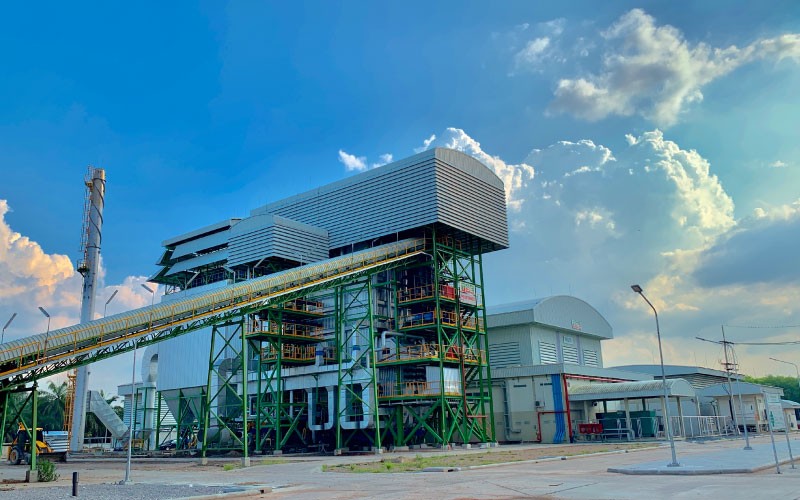
Network-embedded AI infrastructure nodes positioned for ultra-low-latency compute across multiple metros
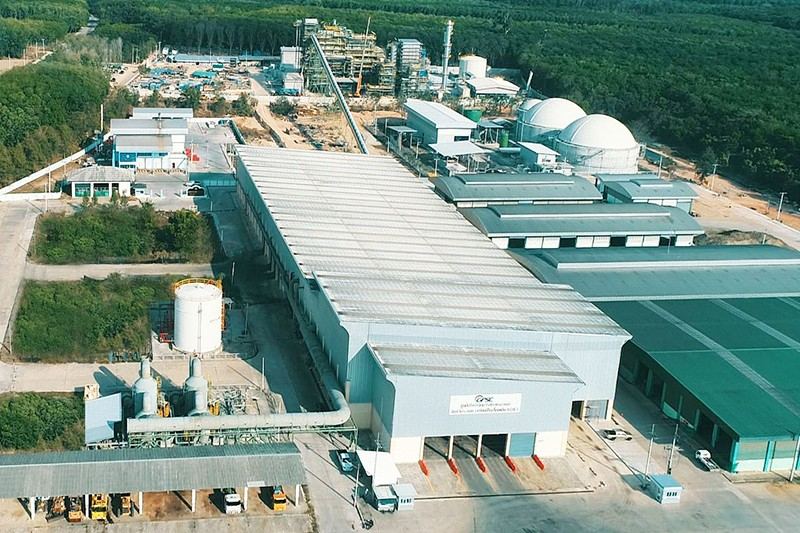
Co-located renewable biomass power assets provide immediate, firm, dispatchable power; dedicated water resources; and 24/7 grid redundancy
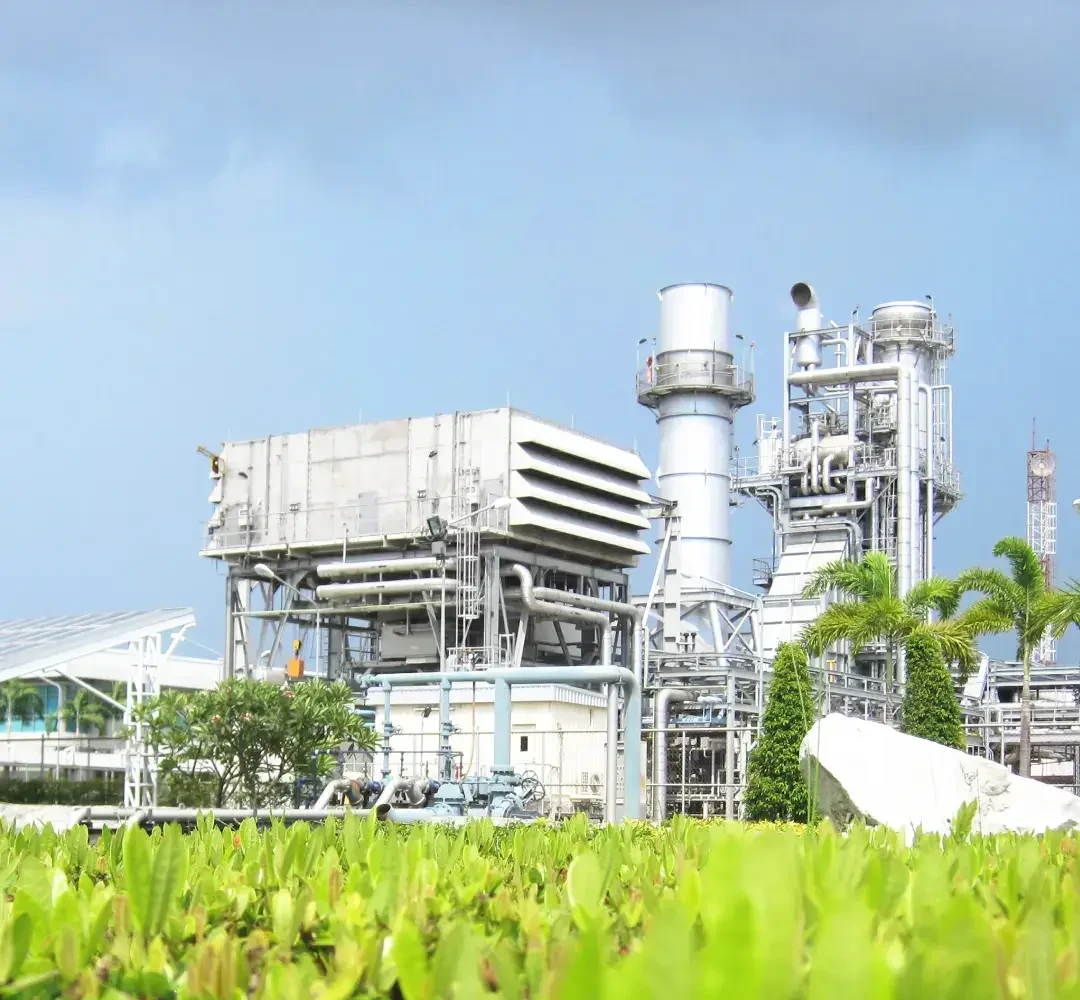
Existing industrial sites and fast-track permitting enable sub-12-month delivery from committed site to Ready-for-Service